By Bobbi Sheahan

I appreciate the opportunity to return to D.S. Walker’s site as a guest blogger! Today, I’m back to talk about Sensory Processing Disorder, which was formerly called Sensory Integration Dysfunction.
Our senses are what we humans use to perceive. In addition to our five senses of taste, touch, smell, hearing and vision, people also perceive temperature, balance, acceleration, proprioception/kinesthesis (where one’s body is in space), and pain. When any of these “senses” are calibrated differently from the norm, it is considered a sensory difference. These differences can rise to the level of sensory dysfunction, which can be dangerous. For example, my child seemed, for years on end, to have no sense of smell and perception of pain. Before having my daughter, I’d never thought of pain as a good thing, but it is actually an extremely good thing; pain is a useful signal that tells us to stop doing something.
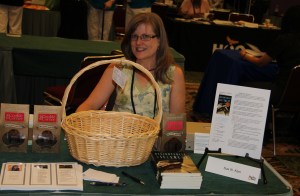
 I recently had the privilege of speaking with Marla Roth-Fisch, author of Sensitive Sam and a Board Member of the Sensory Processing Disorder Foundation. She was very patient with my questions. I asked her all about sensory issues, and wow, did I learn a lot about sensory challenges! I’ll now share with you some basic misunderstandings about Sensory Processing Disorder that Marla and the SPD Foundation can help us to clear up.
Myth: Sensory issues are really discipline issues.
Truth: When a child is hypersensitive, you may think that he’s just being high-maintenance. If, on the other hand, your child is hyposensitive, you may feel as if you are parenting a human cannonball. Often, you may see a little of both. In either event, your child isn’t doing this on purpose to annoy you, even though it may feel that way. You may just think that Johnny is a picky eater, but the truth is, you can’t “solve” a sensitive child’s issue by continuing to irritate him further. His brain is processing information differently, and he needs some help to cope with that. As parents, we have to remember that we’re trying to help our kids to be able to function, not just trying to get them to be compliant in the moment. There are all sorts of things that we can do to help. For example, if a child has a sensitivity to certain types of clothing – maybe he doesn’t want to wear jeans or clothing with labels – there are clothing companies who make nothing but soft clothing, such as www.softclothing.net . Instead of treating a sensory issue as a discipline issue, you might spend some time with a good Occupational Therapist, who can acquaint you with a sensory diet (it’s not about food – well, not JUST about food) and provide you with tools such as weighted blankets that can help your child to feel comfortable and adapt. These sorts of things can make a big difference, and I’ll bet you’ll see more pleasing — and safe – behavior, too. As Marla Roth-Fisch explained to me, a child with SPD is special, not bad.

Microsoft Office Clip Art
Myth: For a sensory issue to be real, it should be consistent.
Truth: Sensory issues can be very slippery! Carol Kranowitz, in The Out of Sync Child, points out that kids can have sensory issues in one area (say, hearing or vestibular) but not another (auditory or smell for example). She also points out, “Sometimes the child will show characteristic of a dysfunction one day but not the next. For instance, the child with proprioceptive problems may trip over every bump in the pavement on Friday yet score every soccer goal on Saturday. Inconsistency is the hallmark of every neurological dysfunction.” At our house, we have a child who went from demanding dangerously-hot showers (she insisted that showers at a reasonable temperature were Cold Showers) to not really seeming to notice water temperature at all. She – and her mother — can also veer from agile to clumsy in a single bound.
Myth: Sensory Processing Disorders are rare.
Truth: According to the SPD Foundation, as many as one in twenty people deal with some sort of sensory integration issue. (This number may be even higher, and it appears to be on the rise.) Don’t like labels on clothes? Bugged by sounds that the person next to you doesn’t notice? Insensitive to pain? A bit of a klutz? Could be a sensory challenge. If it is, you aren’t alone. And you aren’t crazy or high-maintenance either. Sensory issues are real, and they are HUGE. Speaking for myself, I didn’t appreciate my own sensory processing differences until my daughter was diagnosed with autism. Like most kids with autism, she has a boatload of sensory differences – although, interestingly enough, sensory issues aren’t part of the diagnostic criteria for autism. (I’ll restrain myself from digressing into that topic, but I’m tempted…)

Microsoft Office Clip Art
Myth: There’s nothing you can do about sensory issues.
Truth: There is more help available than you might realize! Good Occupational Therapy for SPD is fun, play-based, and family-centered. Another great jumping-off point is a lovely children’s book by Marla Roth-Fisch, called Sensitive Sam. I love this book for many reasons – the adorable illustrations, the great information, the fun rhyming format, the fact that my kid won’t give my copy back to me – but the thing that jumps out to me about the book is the fact that so many people – children and adults alike — can pick it up and have a lightbulb moment – “Hey, I do that! Thought I was the only one!” I think the word I’m looking for is accessible. It’s delightfully accessible. If we can be accepting and compassionate about our own sensory issues, we’re going to be in a much better position to help our kids understand theirs.

MicroSoft Office Clip Art
Myth: There’s nothing good about having sensory issues.
Truth: There’s no doubt that having one’s senses calibrated differently is a challenge, but there is lots of help for the challenges, and there is an upside too. I call them Sensory Superpowers. My daughter and my husband, for example, have sensitive hearing, but it is coupled with an ability to hyperfocus, and I have seen them accomplish amazing things as a result. Find me a genius, and I’ll bet you’ve just found someone whose senses are very acute.
Myth: Kids will just outgrow their sensory issues.
Truth: Maybe they will, and maybe they won’t. If a sensory issue rises to the level of interfering with daily enjoyment of life, this is where an Occupational Therapist can be a big help.
Myth: I don’t have sensory issues.
Truth: Okay, this one might be true. Maybe you do, and maybe you don’t. Gifted people, and those with autism and ADHD, are more frequently diagnosed with Sensory Processing Disorder. Lots and lots of people – including people with no other neurological or physical challenges or disabilities – have sensory sensitivities. For years, I’d say, “I have high pain tolerance,” or “I have a sense of smell like a dog,” and I did not realize that these were Sensory Superpowers.
More Resources: Want to learn more about Sensory Processing Disorder? Lots of great resources are available at http://www.sensoryworld.com/ and Marla Roth-Fisch’s website is terrific: http://www.sensitivesam.com/author/authorillustrator-marla-roth-fisch Marla’s book, Sensitive Sam, and Dr. Lucy Jane Miller’s books, No More Secrets and Sensational Kids, are available from Future Horizons with a 15% discount plus free shipping when you use the checkout code BOBBI: . For a more in-depth look at the use of deep pressure, I also recommend to you an excellent article written almost twenty years ago by Temple Grandin, Ph.D., called Calming Effects of Deep Pressure in Children, College Students, and Animals, published in the Journal of Child and Adolescent Psychopharmacology, Volume 2, Number 1, 1992, Mary Ann Liebert, Inc., Publishers, which can be found here: http://www.grandin.com/inc/squeeze.html
 Bobbi Sheahan is co-author of What I Wish I’d Known About Raising a Child With Autism; A Mom and a Therapist Offer Heartfelt Guidance for the First Five Years (Future Horizons, 2011). Portions of this article are excerpted from Chapter 3 of the book, which is available at www.fhautism.com and wherever books are sold. Bobbi is also the cohost of the internationally-broadcast Autism As They Grow radio show, which broadcasts live on Wednesday nights, 9:30 Eastern/6:30 Pacific/1:30 a.m. London/Dublin and is available in archives anytime at www.talkingspecialneeds.com.
 What is Inspiration? The Merriam Webster Dictionary defines inspiration as “the act or power of moving the intellect or emotions.” People who work to change the world to a place where we appreciate differences inspire others. They accept the challenge to heal society of its wrongs. They raise their voices to educate others as they work to forgive them for their lack of understanding.
 Laura Nagle is an Aspie woman who prefers being called an Aspie instead of Autistic because, “That man (Hans Asperger) got us.” I am proud to call her my friend. She found me on Twitter months ago and identified me as a “half-Aspie”, a term I have come to love. The movie Vectors of Autism premiers April 13th in Flagstaff, AZ on the NAU campus. She talks about how society holds people back much more than anything else does. She wants to heal society as do I. She does not like using the word disability and I understand completely. She and other adults give parents a better understanding of Aspie and autistic children in a way that no one else can.








 Delightfully Different Life